
Give Us Our Daily Bread
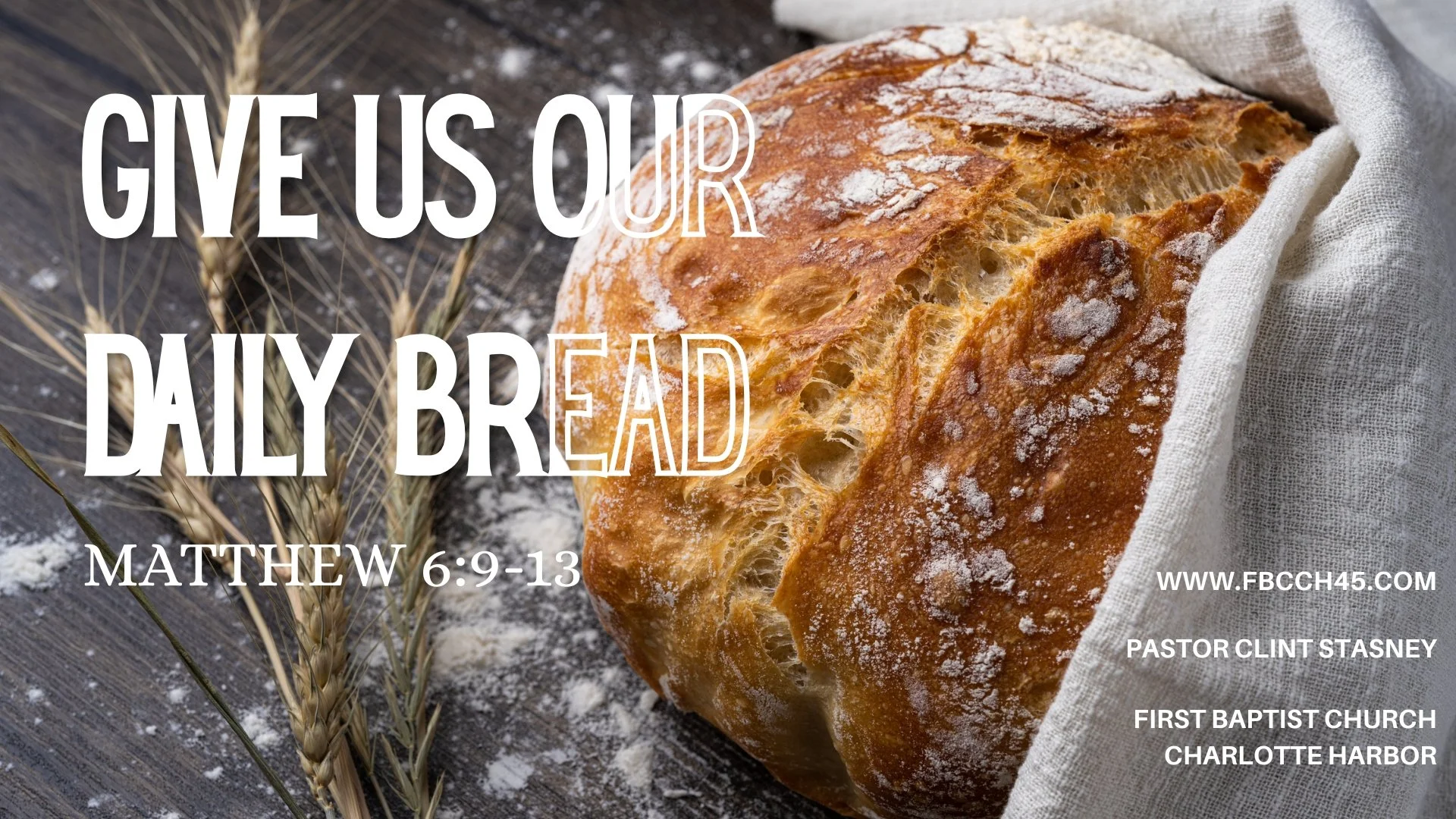
Daily Bread: Learning to Trust God With Today
There is a phrase tucked inside one of the most familiar prayers in all of Scripture that many believers gloss over without a second thought. "Give us this day our daily bread." For those of us living in a nation of abundance, surrounded by grocery stores, food banks, and government assistance programs, the words can feel almost quaint -- a relic of a harder, more desperate era. But to dismiss this petition as irrelevant to modern life is to miss something profound about the nature of God and the nature of faith.
This simple request is not merely about food. It is a daily declaration of dependence on the One who holds all of creation in His hands.
The Context of the Prayer
Matthew 6:9-13 presents what is commonly called the Lord's Prayer, though it might more accurately be called the disciples' prayer -- a model given to teach followers of Christ how to approach God. Before arriving at the petition for daily bread, the prayer establishes something critical: who God is and what our relationship with Him looks like.
"Our Father who is in heaven." This is not a cold, distant deity. This is Abba -- an intimate word that conveys the warmth and closeness of a loving parent. God is not a pagan idol that must be manipulated through endless repetition or flattery. Matthew 6:7-8 makes this clear, warning against meaningless repetition and reminding us that God already knows what we need before we ask. The purpose of prayer is not to inform God or to strong-arm Him into action. It is to acknowledge who He is, align our hearts with His will, and receive from Him with gratitude.
The prayer moves from praise -- hallowed be your name, your kingdom come, your will be done -- into petition. And the first human need addressed is the most immediate one: today. Not next week. Not next year. Today.
Bread Means Everything
When Jesus instructs His followers to ask for daily bread, the word "bread" functions as a sweeping term for everything a person needs to sustain life in the present moment. It covers food, yes, but also transportation, health, employment, shelter, and the countless other provisions that make daily life possible. It is a prayer that says, "God, I cannot do this without you. Show up today."
This is a posture that cuts against the grain of a self-sufficient culture. In a society where most needs can be met with a credit card or a delivery app, genuine dependence on God can feel unnecessary. But the prayer does not ask whether we feel dependent. It assumes we are. Because the truth is, every resource available to us -- every crop, every mineral, every innovation -- traces its origin back to a Creator who spoke the world into existence. As Philippians 4:19 promises, God will supply every need according to His riches in glory in Christ Jesus. The supply line runs from heaven, not from our own ingenuity.
Gratitude Is Not Optional
One of the sharpest edges of this petition is the implicit call to thankfulness. To pray for daily bread is to acknowledge that what you already have came from somewhere -- and that somewhere is God. This means that a rushed, thoughtless prayer over a meal is not a small thing. It is a missed opportunity to honor the One who provided it.
Consider the image of a parent who sacrifices repeatedly for a child who never acknowledges it. The ingratitude stings. How much more does careless indifference wound the heart of a Father who has provided everything -- not just food on the table, but the very breath in our lungs?
Genuine gratitude changes the way we see ordinary things. A running vehicle. A steady job. A roof that does not leak. These are not accidents or personal achievements. They are gifts from a generous God, and they deserve to be received as such.
When God Provides Unexpectedly
There is something remarkable about the way God sometimes answers the unspoken longings of His children. The prayer for daily bread does not promise luxury -- it promises sufficiency. God commits to meeting needs, not necessarily wants. And yet, woven through Scripture and through the lived experience of believers, there are moments when God goes beyond the minimum.
Elijah was fed by ravens in the wilderness (1 Kings 17). The widow's oil did not run out (1 Kings 17). Five thousand people were fed from five loaves and two fish (Matthew 14). God is not stingy. He is a Father who delights in His children, and sometimes His provision arrives in ways that are so specific and so timely that there is no other explanation.
The key is that these moments are received with wonder and gratitude, not demanded as entitlements. The prayer is "give us," not "owe us."
Daily Trust Is a Discipline
Notice the word "daily." Not weekly. Not annually. Daily. This is intentional. God could have designed a system where His people stockpiled enough grace and provision to last a lifetime. Instead, He invites His children into a rhythm of daily return -- daily dependence, daily trust, daily gratitude.
This is not a design flaw. It is the architecture of a relationship. The Israelites in the wilderness received manna one day at a time. Those who tried to hoard it found it rotted (Exodus 16). The lesson was not about food. It was about trust. God was teaching His people that He could be relied upon -- not just once, but every single morning.
The same lesson applies today. Financial uncertainty, unexpected bills, medical needs, and unanswered questions are not signs that God has forgotten His children. They are invitations to return to the posture of the prayer: hands open, eyes upward, trusting that the Father who knows what we need before we ask will not leave us without what we require.
A Prayer Worth Meaning
"Give us this day our daily bread" is not a throwaway line. It is a bold, faith-filled declaration that God is sovereign over the present moment -- that He sees, He knows, and He provides. To pray it with sincerity is to relinquish the illusion of self-sufficiency and embrace the reality that every good and perfect gift comes from above (James 1:17).
Pray it today. And mean it.
The sermon describes prayer as an act of acknowledging dependence on God rather than an attempt to manipulate Him -- in what ways might your own prayer life subtly drift toward trying to strong-arm God into giving you what you want rather than trusting His provision?
The pastor draws a distinction between religious Christianity and a genuine relationship with God, warning that one can preach, teach, and perform religious duties and still miss salvation -- how do you personally examine whether your faith is rooted in relationship or religion?
The phrase 'give us this day our daily bread' is described as covering every need of life, not just food -- what areas of daily life do you most struggle to consciously entrust to God rather than relying on your own resources or planning?
The sermon uses the story of Jesus calming the storm to illustrate that He was at rest because He trusted the Father completely -- what does it look like practically for a believer to rest in God's sovereignty during the most violent storms of life?
The pastor shares that God provided steak for weeks after a simple, almost offhand prayer during a season of poverty -- how does this kind of story shape or challenge your understanding of how God balances providing our needs versus our wants?
Proverbs 30 presents a prayer asking for neither too much nor too little, out of fear that excess would lead to forgetting God and poverty might lead to dishonoring Him -- how does this tension between wealth and want shape the way you think about contentment and gratitude?
The sermon argues that being faithful with little is a prerequisite for God entrusting you with more, drawing on the parable of the talents -- in what specific ways are you currently being faithful with what God has already placed in your hands?
The pastor describes how praying openly before a meal in a public restaurant led to opportunities to share the gospel -- how might a more visible and sincere expression of gratitude in everyday settings become a form of witness to those around you?
The disciples' prayer is presented as addressing the present through daily bread, the past through forgiveness of debts, and the future through deliverance from temptation -- which of these three dimensions of prayer do you find most difficult to engage with honestly, and why?
The sermon contrasts believers in Iran who trust God with nothing against American believers who often take abundance for granted -- how does awareness of the global body of Christ challenge or reframe the way you approach gratitude and dependence on God?