
An Eye For An Eye
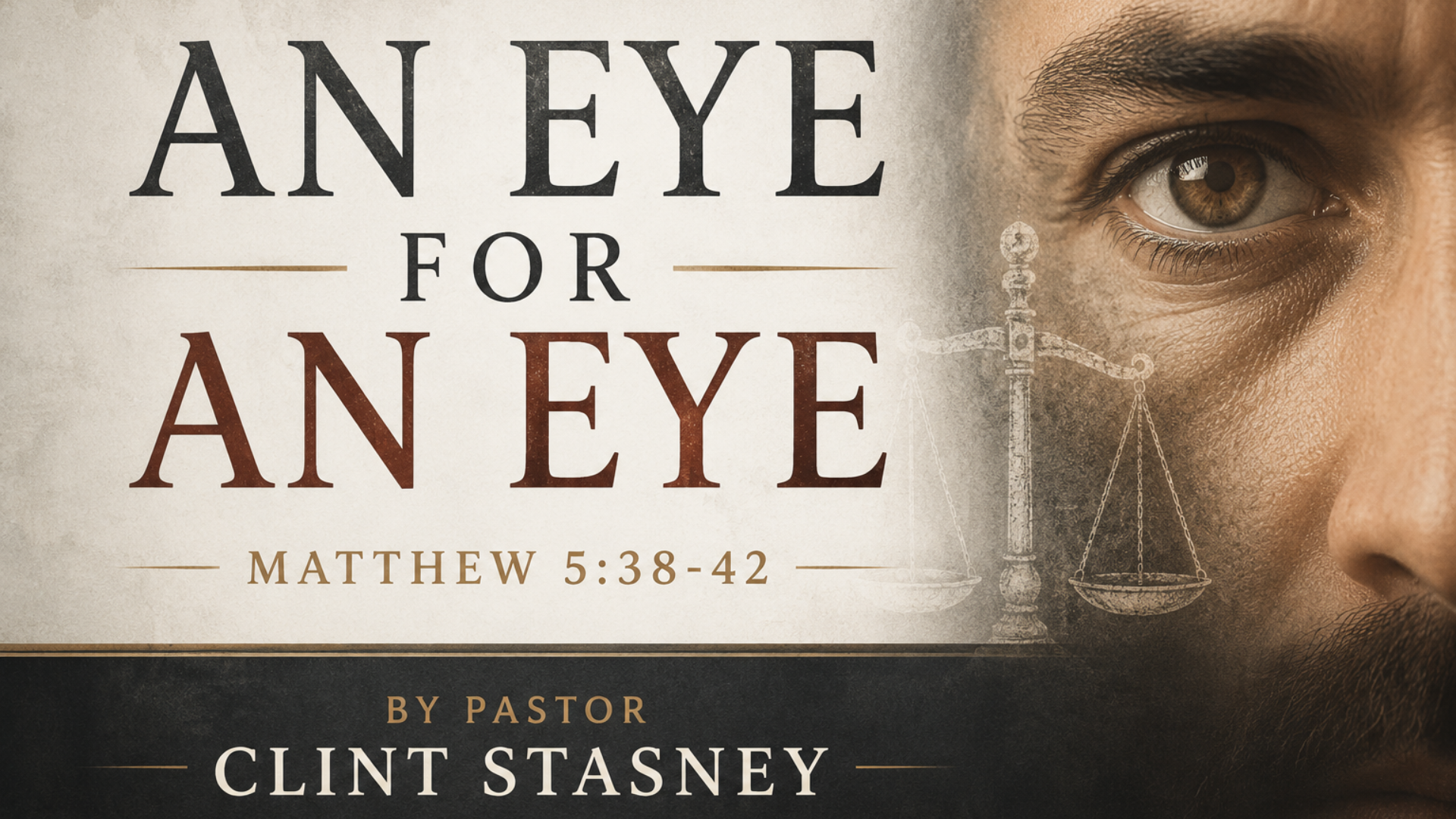
When Evil Meets Good: The Revolutionary Call to Love Your Enemies
The ancient principle of "an eye for an eye and a tooth for a tooth" has echoed through millennia of human history. Most people recognize this phrase, often quoting it to justify retaliation or balanced retribution. But what if we've been misunderstanding its purpose all along?
This Old Testament principle appears three times in Scripture, and each time it's presented within a specific context: the judicial system. It was never meant as permission for personal vengeance. Instead, it established a framework where punishment would fit the crime—a revolutionary concept in ancient times when personal feuds could escalate without limit.
By the time of the Pharisees, however, this judicial principle had been twisted into something unrecognizable. What God intended for courts had been seized by individuals who declared, "I'll take care of this myself." And when we take justice into our own hands, we rarely stop at equal measure. We almost always go further.
Four Pillars Under Attack
The teaching that confronts this distortion addresses four fundamental aspects of human existence: dignity, security, liberty, and property. Remarkably, these same principles would later be enshrined in documents like the United States Constitution—evidence of how deeply biblical wisdom has shaped Western civilization.
Dignity is the first battleground. Imagine the humiliation of a backhanded slap across the right cheek—a gesture so disrespectful in Roman culture that slaves reportedly preferred physical beatings to this particular insult. It wasn't about the pain; it was about the degradation.
We experience similar attacks today, though rarely physical. Someone disrespects us at work, maligns our character online, or dismisses our contributions. Our natural response? We want to strike back, to defend our honor, to make them pay for their disrespect.
But the revolutionary teaching challenges this instinct: turn the other cheek. Not as an act of weakness, but as a declaration that our dignity doesn't come from others' opinions. Our worth is established in Christ, unchangeable by human insult.
Security forms the second pillar. In ancient times, a person's outer coat served as their blanket—their protection against the cold night. Mosaic law required that if someone pledged their coat, it must be returned by nightfall. It was about basic survival.
The teaching goes further: if someone sues you for your shirt, give them your coat as well. This isn't a blanket invitation for the world to exploit believers. Rather, it's a call to prioritize making things right over protecting our own comfort. When we've genuinely wronged someone, we shouldn't look for loopholes or minimal compliance. We should seek restoration, even at personal cost.
Liberty represents our freedom to choose our own path. Roman soldiers could compel any non-citizen to carry their equipment for one mile—but only one mile. After that, the person was legally free to refuse.
The radical instruction? Carry it two miles. Voluntarily surrender your liberty to serve someone who has the power to compel you. Why? Because this unexpected generosity becomes a testimony. It transforms a forced march into a willing gift, turning oppression into opportunity for witness.
Property completes the quartet. Everything we own, everything we've worked for and paid off—none of it truly belongs to us. We are stewards, not owners. When someone genuinely needs help, even if it costs us our resources, we're called to respond with generosity.
The Heart Behind the Command
These aren't instructions for becoming a doormat. Jesus Himself didn't passively accept every wrong. When moneychangers defiled the temple, He fashioned a whip and drove them out with righteous anger. There is a place for standing against evil, for protecting the vulnerable, for defending what is holy.
But these teachings address something deeper: the condition of our hearts when we're personally wronged.
Consider the story of Abraham and Lot. Lot essentially stole the best land from Abraham, who could have enforced his rights as the elder. Instead, Abraham took the lesser portion. Later, when Lot was captured by raiders, Abraham could have viewed it as divine judgment. Instead, he raised an army and rescued the very person who had wronged him.
Or consider a modern example: a college student whose roommate robbed him of irreplaceable possessions. Anger would be justified. Pursuing legal action would be reasonable. Instead, when that same thief later became homeless, the victim offered him a place to stay. This unexpected kindness became the catalyst for the thief's transformation and eventual conversion to faith.
Heaping Coals of Love
There's a powerful principle at work here, illustrated by a counseling story. A woman consumed with hatred for her husband sought advice on how to hurt him most deeply through divorce. The counselor's wisdom was unexpected: "Love him extravagantly for six months. Meet his every need. Show him kindness when he's cruel. Then divorce him—that will devastate him."
The woman followed this advice, determined to inflict maximum pain. But something remarkable happened. As she practiced love, her own heart transformed. Six months later, she had no desire to divorce. The exercise in strategic vengeance had become genuine affection.
This is the mystery of overcoming evil with good. When we respond to hatred with love, something supernatural occurs. Sometimes it changes the other person. Sometimes it changes us. Often, it changes both.
Leaving Room for God
Perhaps the most challenging aspect of this teaching is the call to abandon personal vengeance entirely. "Never take your own revenge," Scripture declares, "but leave room for the wrath of God."
This requires tremendous faith. We want to see justice done, preferably by our own hand, on our own timeline. But when we seize vengeance, we often fall into the same pit we're trying to fill. People have ended up in prison trying to retaliate for wrongs done to them.
God is a righteous judge who will hold every act accountable. He sees what we cannot see. He knows what we cannot know. And He can accomplish what we never could—true justice combined with the possibility of redemption.
The call is clear: when your enemy is hungry, feed him. When he's thirsty, give him drink. Don't be overcome by evil, but overcome evil with good.
This isn't natural. It's supernatural. It's the way of the cross, where the ultimate innocent victim prayed for His executioners: "Father, forgive them, for they know not what they do."
That same spirit of forgiveness is available to us—not as weakness, but as the greatest strength imaginable. The strength to love when hated, to bless when cursed, to give when taken from.
It's revolutionary. It's countercultural. And it's the heart of what it means to follow Christ.
How does understanding the original context of 'an eye for an eye' as a judicial principle rather than personal vengeance change your perspective on justice and forgiveness?
In what areas of your life do you struggle most with letting go of personal vengeance and trusting God's justice instead?
When Jesus addresses dignity, security, liberty, and property in Matthew 5:38-42, which of these four areas is most difficult for you to surrender to God's control?
The sermon mentions that our security should be in Christ, not in worldly possessions. What practical steps can you take to shift your sense of security from material things to your relationship with God?
How does the example of Abraham's response to Lot stealing from him challenge your current approach to those who have wronged you?
The counselor's advice to the vengeful wife resulted in her heart being transformed. What does this story reveal about the power of choosing love over hate, even when it feels undeserved?
Romans 12:19 says 'Vengeance is mine, I will repay, says the Lord.' Why is it so difficult to leave room for God's wrath instead of taking matters into our own hands?
Jesus could have destroyed his accusers at any moment but instead said 'Forgive them for they know not what they do.' How does Christ's example on the cross challenge your response to personal attacks or insults?
The sermon states that responding to evil with good is 'heaping coals' on someone's head. Have you witnessed or experienced a situation where persistent love transformed a hostile relationship?
If our dignity, security, liberty, and property all belong to God, how should this reality change the way we respond when these things are threatened or taken from us?