
Justice Not Revenge
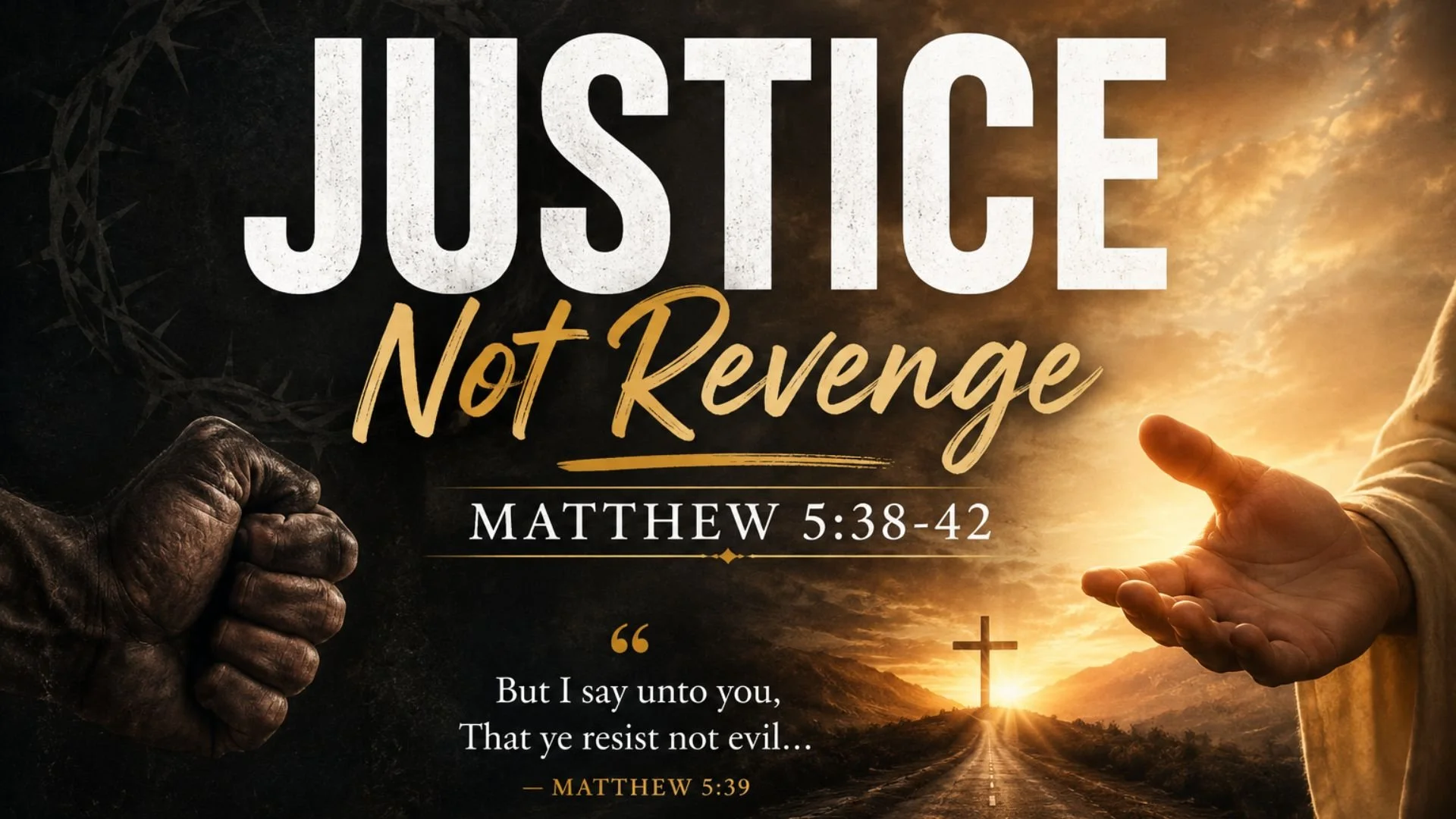
Justice, Mercy, and the Heart of True Faith
The ancient words echo through centuries: "An eye for an eye, a tooth for a tooth." These familiar phrases from the Old Testament have been quoted, misquoted, and misunderstood countless times throughout history. But what did they really mean? And more importantly, what do they reveal about the nature of God's justice and our human tendency to corrupt it?
The Corruption of Justice
When sin entered the world in the Garden of Eden, it didn't just corrupt humanity's relationship with God—it corrupted our understanding of justice itself. We were created with an innate sense of fairness, a longing for things to be made right. But sin twisted that noble desire into something vengeful, something excessive, something self-serving.
The principle of "an eye for an eye" was never meant to be a license for personal revenge. In its original context within the civil law of ancient Israel, this principle served a crucial purpose: ensuring that punishment matched the crime—no more, no less. It was about proportionality and fairness in the courts, not about individuals taking justice into their own hands.
Yet religious leaders of Jesus' time had transformed this principle into something entirely different. They used it to justify personal vendettas, to accumulate power, and to create a system where outward appearances mattered more than the condition of the heart.
Three Types of Law
To understand God's justice properly, we need to recognize that the Old Testament contains three distinct types of law:
Moral law governs our relationship with God—the Ten Commandments being the prime example. This law remains eternally relevant.
Civil law addresses how society should function, protecting the weak from the strong and ensuring justice is administered fairly. This too continues to have application in how we structure our communities.
Ceremonial law consisted of rituals and practices specific to Israel that pointed forward to Christ. Once Christ came and fulfilled these ceremonies, they were no longer binding.
Understanding these distinctions helps us see that God's character hasn't changed between the Old and New Testaments. The same God who established justice in ancient Israel is the same God who offers mercy through Christ. There aren't two different gods—one vengeful, one lenient. There is one God who is both perfectly just and perfectly merciful.
When Justice Goes Wrong
Our world is filled with examples of justice corrupted. Consider the man imprisoned for 37 years for a bank robbery where no one was harmed, while murderers walk free after 15 years. Consider judges who release dangerous criminals only to see them commit worse crimes. Consider the way stronger people exploit weaker ones when there's no accountability.
These injustices grieve us because we were created to long for things to be made right. But they also reveal a sobering truth: when sinful humans administer justice, the system will be imperfect. Yet this doesn't mean we abandon the pursuit of justice—it means we recognize our desperate need for a higher standard.
The Story of Substitution
During the American Civil War, a group of Confederate raiders repeatedly attacked Union supply lines. When 28 of these men were finally captured, they were sentenced to hang. Among them was a young man with a wife and small children at home.
A farmer from the area, not involved in the fighting, pleaded with the Union colonel to show mercy to this young father. The colonel was unmoved: "I have orders to hang 28 men, and 28 men will hang."
Then the farmer made an extraordinary offer: "Can I take his place?"
The colonel agreed. The young father was released, and the innocent farmer was executed in his stead.
This story powerfully illustrates what Christ has done for us. Every one of us deserves the death penalty for our sins. Every single person falls short of God's perfect standard. But Jesus stepped forward and said, "I will take their place."
Beyond Religious Performance
The danger of religion without relationship is that it produces people who look righteous on the outside while remaining unchanged on the inside. They quote Scripture, attend services, follow rules, and maintain appearances—all while their hearts remain far from God.
This was the problem Jesus confronted in His sermon. The Pharisees had created an elaborate system where you could be "right with God" through external compliance. But God has never been interested in mere external compliance. He wants transformed hearts.
Romans 10:9-13 makes this clear: "If you confess with your mouth Jesus is Lord and believe in your heart that God raised him from the dead, you will be saved... For whoever will call on the name of the Lord will be saved."
Notice it's not about having the right religious pedigree, wearing the right clothes, or following the right rituals. It's about a heart that genuinely calls upon Christ for salvation.
The Difference Between Justice and Mercy
Here's a crucial distinction: As Christians, we should never want justice from God. If we received what we truly deserved, we would all be condemned. What we desperately need is God's mercy and grace.
Yet this doesn't mean justice disappears. Civil authorities still have a God-given responsibility to punish wrongdoing and protect the innocent. A person can—and should—forgive someone who has wronged them while still supporting appropriate legal consequences for that person's actions.
Forgiveness is about the condition of our own hearts before God. Justice is about maintaining order in society and protecting the vulnerable. Both have their proper place.
Living with Purpose
If salvation were only about escaping hell, God would immediately take us to heaven the moment we believed. But He doesn't. Why? Because we're saved with a purpose: to share the good news of Jesus Christ with others.
This week, you'll encounter people no one else will see. God has strategically placed you in your workplace, your neighborhood, your family—not by accident, but with divine intention. Will you share the hope you've found in Christ?
The Only Thing That Matters
In the end, you cannot take your wealth, reputation, or achievements with you. The only question that will matter when you stand before God is this: Did you receive the righteousness of Christ?
That righteousness isn't earned through good works or religious performance. It's received as a gift when we place our faith in Jesus. And when God looks at those who trust in Christ, He doesn't see their failures and shortcomings—He sees the perfect righteousness of His Son.
The invitation stands: Call upon the name of the Lord and be saved. Not because you've done everything right, but because He has done everything necessary.
How does understanding that justice was part of God's original creation but became corrupted by sin change your perspective on pursuing justice in today's world?
In what ways might we, like the Pharisees, be focusing on outward religious behaviors while neglecting the heart transformation Jesus desires?
What is the difference between personal forgiveness and civil justice, and how should Christians balance both when wronged?
Why do you think Jesus emphasized that our righteousness must exceed that of the Pharisees, and what does that mean for how we approach our faith?
How can we distinguish between genuine heart knowledge of God versus mere intellectual knowledge of Scripture in our own lives?
What does it reveal about God's character that the same God of the Old Testament is the God of the New Testament, showing both justice and mercy?
If Christians truly loved their neighbors and friends, how would our witness and evangelism look different than it does now?
How does the substitutionary death of Christ, illustrated by the Civil War story, deepen your understanding of what Jesus accomplished on the cross?
In what ways might we be tempted to take justice into our own hands rather than trusting God and civil authorities to administer it properly?
What does it mean practically to live with the mindset of knowing Jesus and making Him known in the specific contexts where God has placed you?