
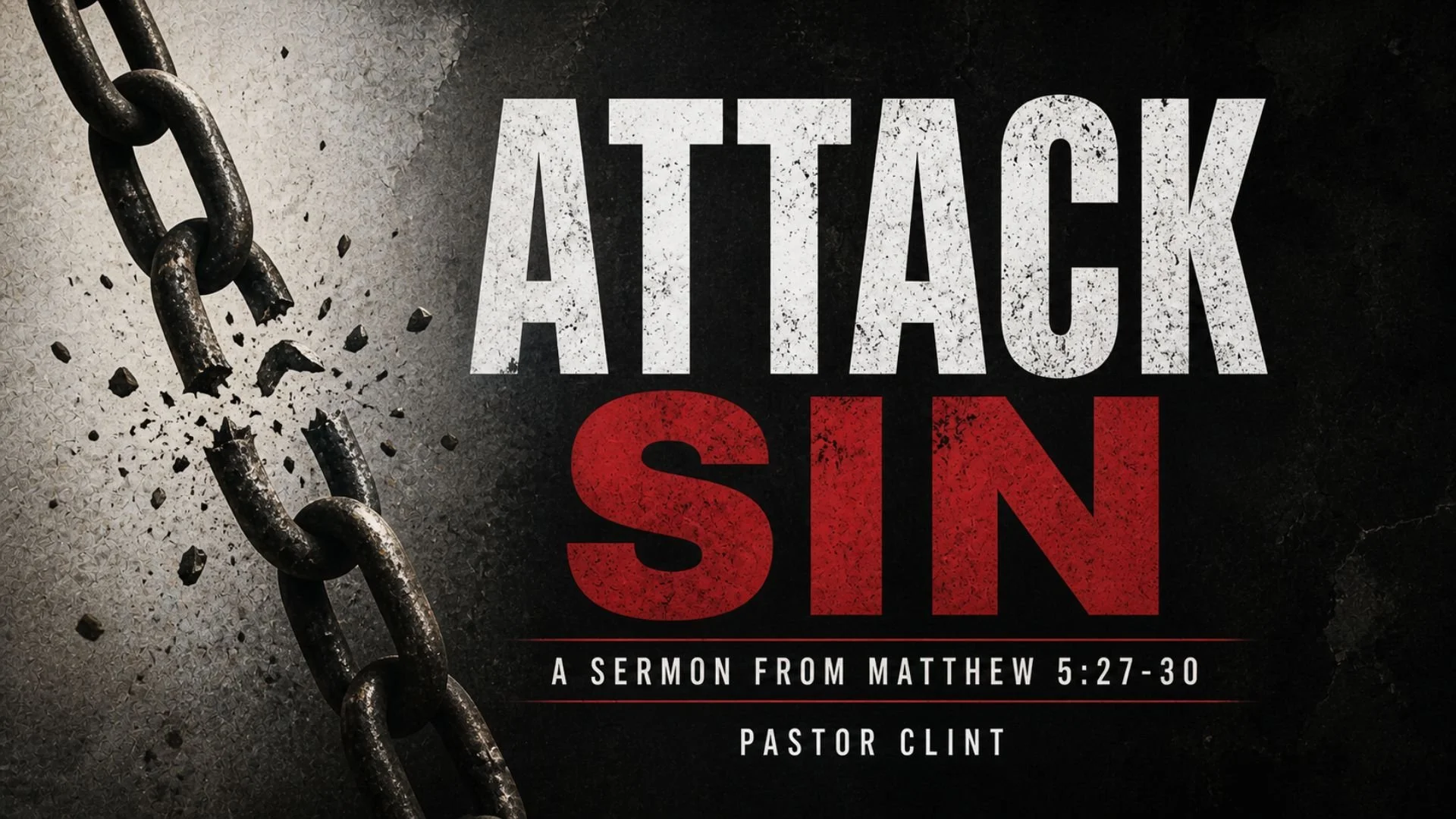
Attack Sin
The Heart of the Matter: Why External Righteousness Will Never Be Enough
We live in a world obsessed with appearances. From carefully curated social media profiles to the masks we wear in our daily interactions, we've become experts at managing how others perceive us. We convince ourselves that if we look good on the outside, we must be doing alright. But what if the entire foundation of that thinking is fundamentally flawed?
The Pharisee Problem We All Share
The religious leaders of Jesus' time had perfected the art of external righteousness. They meticulously followed religious laws, performed the right rituals, and maintained an impeccable public image. Yet Jesus confronted them with shocking directness: "You whitewashed tombs. You look real pretty on the outside, but you're rotting flesh on the inside."
This wasn't just a problem for ancient religious leaders. It's a universal human tendency that transcends culture, geography, and time. Whether we're American, European, African, or Latino, we all share this inclination to focus on outward appearances while neglecting the condition of our hearts.
The truth that many find uncomfortable is this: you can do all the right things externally and still be spiritually bankrupt.
The Right Hand Illusion
In Jesus' teaching from Matthew 5:27-30, He uses striking imagery about the right eye and right hand. In ancient culture, the right side represented holiness, strength, and righteousness. The Pharisees believed they were doing God's work with their right hand—their best efforts, their strongest attempts at righteousness.
Jesus' message was devastating: even your best isn't good enough.
"If your right eye makes you stumble, tear it out and throw it from you. For it is better for you to lose one of the parts of your body than for your whole body to be thrown into hell."
This isn't a literal command for self-mutilation. Rather, it's a call to violently deal with sin—not through external actions, but through a genuine transformation of the heart. You could physically remove your eye or hand and still have a corrupt heart. The problem isn't your body parts; it's the condition of your soul.
The Unavoidable Truth About Sin
Numbers 32:23 warns us: "Be sure your sins will find you out." History is filled with examples of people who thought they could hide their wrongdoing, only to be exposed. From biblical figures like Achan and David to modern criminals who make foolish mistakes, the pattern remains constant.
But here's the deeper issue: we're not just talking about getting caught by human authorities. We're talking about standing before a holy God who knows every thought, every motive, every secret desire of our hearts.
Romans 1:18 declares, "For the wrath of God is revealed from heaven against all ungodliness and unrighteousness of men who suppress the truth in unrighteousness."
This is where modern culture—and sadly, many churches—have gotten the message completely wrong. We've replaced the gospel of redemption with a message of self-improvement. We've traded the call to repentance for an invitation to personal fulfillment.
The Slippery Slope Away from Truth
Romans chapter 1 outlines a sobering progression. When people abandon the Creator and refuse to honor God, a cascade of consequences follows. The first major sign? Sexual immorality and the breakdown of God's design for human relationships.
"Therefore God gave them over in the lusts of their hearts to impurity so that their bodies would be dishonored among them."
This isn't just ancient history. We see this pattern playing out in real time. Mainline denominations that once preached the holiness of God have compromised their message in the name of being "loving" and "inclusive." They've removed hymns about spiritual warfare from their hymnals. They've stopped preaching about sin because it might make people uncomfortable or drive them to another church.
But here's the devastating reality: if people don't understand their need for a Savior, there's no reason for salvation.
The Only Hope: Christ's Righteousness
Romans 3:10 states unequivocally: "There is none righteous, not even one."
This is the bad news that must precede the good news. We cannot achieve righteousness through our own efforts. We cannot earn our way to heaven through good deeds, religious rituals, or moral living. Even if we had a million years to try, we would still fall short.
But here's where the gospel becomes truly good news: what we cannot do for ourselves, Christ has done for us.
Abraham believed God, and it was credited to him as righteousness. Not because Abraham was perfect—he lied about his wife, made terrible decisions, and failed repeatedly. But he placed his trust in God rather than in his own abilities.
When we come to Christ in genuine repentance and faith, something miraculous happens. God doesn't just forgive our sins; He places Christ's righteousness upon us. When the Father looks at us, He sees the perfect righteousness of His Son.
This is why Jesus told the crowds that unless their righteousness exceeded that of the Pharisees, they would never enter the kingdom of heaven. It seemed like an impossible standard—and it is, for us. But through Christ, we are clothed in a righteousness that far surpasses anything we could achieve on our own.
The Heart Change That Changes Everything
Martin Luther, one of the key figures of the Reformation, understood this struggle intimately. As a Catholic priest, he looked perfect on the outside. He followed all the rules, performed all the rituals, even isolated himself in a monastery to avoid temptation. Yet inside, he knew his heart was desperately wicked.
It wasn't until he immersed himself in the book of Romans that he discovered the truth: salvation comes through faith in Christ alone, not through works or religious performance.
This is the transformation Jesus speaks of—not a cosmetic change on the outside, but a radical renovation of the heart. Not a heart of stone, but a heart of flesh. Not our righteousness, but His.
Living in Light of Eternity
The Christian life isn't about achieving moral perfection or maintaining a flawless image. It's about trusting Christ and obeying Him as we grow in sanctification—becoming more like Him day by day.
Does this mean we'll be perfect? No. We'll still struggle with sin and wrestle with temptation. But there's a fundamental difference: our hearts have been changed. We have a new desire to please God. When confronted with our failures, we run to the cross rather than making excuses.
The earth itself groans for redemption, waiting for the day when Christ returns to set all things right. Until then, we live with the expectation of His return, sharing the message that sinners headed for hell can find life in Him—eternal life.
This is the gospel message: not that Jesus came so we could have better lives, bigger houses, or more comfortable circumstances, but that He came to save sinners. He came to offer His righteousness to those who could never earn it themselves.
The question isn't whether you've done enough good things or avoided enough bad things. The question is: Have you trusted in Christ's righteousness rather than your own? Because in the end, that's the only righteousness that will stand before a holy God.